Guide to play
How to play Leela
Leela is simple on the surface and complex deep connection to life itself. Its not a "fix" but a gift to learn and take a lifetime to enjoy. A full game can take many many hours or just minutes, so initially we connect for a couple of hours. Remember the game never starts and never finishes. You can play alone; it is deeper with a guide, and beautiful in a small group where each player presents their own question.
1. Prepare the space
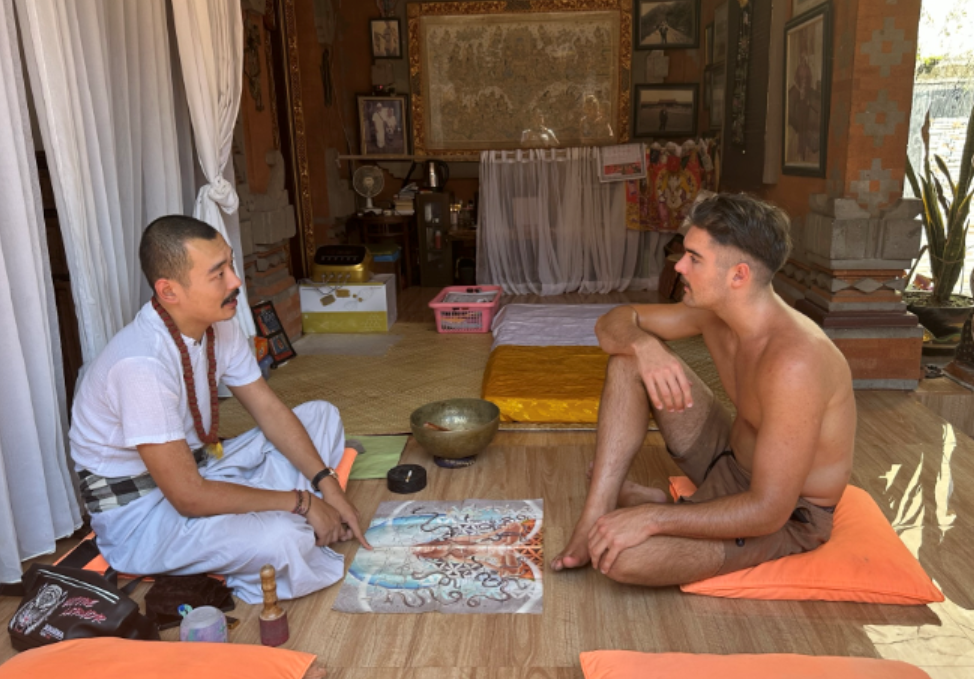
Sit somewhere quiet where you won't be interrupted for two hours. Your guide has the board, one six-sided die, and a small marker —, if your session is at a distance you may place a personal item in front of you, a ring, a stone or a personal item. Light a candle or incense if that helps you settle.
2. Form your question
Everything depends on this. Ask something true and open: a "what" "why" “What to change in my work?” rather than “Will I get the job?”. Say it out loud to your guide, and know that your question is sacred to your guide and not ever for a discussion with others without your presence or permission. Write it down, and hold it while you play. The board answers the question you actually asked.
3. Your game begins with a six
Before this you are not on the board yet. Roll until a six appears and this may require asking the same question in a different manner. When the right question for you is asked, 6 appears on the dice. — this is birth. Roll again, and you are placed on the board. Die will roll 1-6, your guide is now with you supporting much of your life force in a quest for your answer.
4. Move, land, and read
Move the number rolled, one square at a time. When you land, stop. Read the square's name and its passage. Then say what it stirs or brings forward in relation to your question — in plain words, without cleverness. Silence is a legitimate answer.
5. Climb the arrows
If your square is the foot of an arrow, you rise. Arrows sit on 9 virtues eg: purification, mercy, charity, devotion, good company, right knowledge, selfless service. Your guide will prompt messages from both squares — the one you left and the one you arrived at — as a single offering.
6. Follow the snakes down
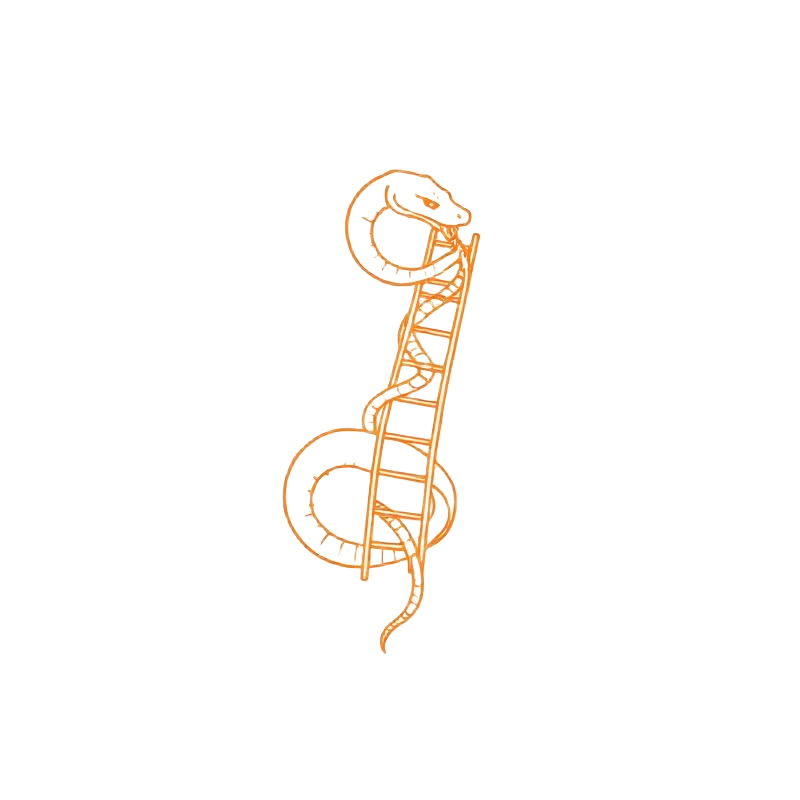
If your square is the head of a snake, you descend. Snakes sit on 10 vices, eg: envy, jealousy, bad company, violence etc. This is not failure; it is information. They form part of your answer. Embrace. The descent almost always names a real pattern, and the return climb is part of the way.
7. Rolling a six
A six gives you the move and another roll. Long chains of sixes are common, and 3 sixes return you to your square. It's all in the game you're playing. Some steps are slow some have a section where one role rapidly leads to the next.
8. Finishing the game
The journey ends at square 68, Cosmic Consciousness — reached only with an exact roll. If your roll would take you beyond it, you stay where you are and roll again. If you overshoot into the final squares and meet the great cobra, you return to the plane of earth and continue; the game closes when 68 is reached.
9. Close and record
Your guide may also write down your path — every square in order — and the key points that square meant for you. The answer will never fail you, you fail it. Read it a week later. Much of the game's teaching arrives long after the game.
Etiquette of the board
- One question per game. Changing the question mid-game ends the reading.
- No advising the player. A guide reads the square and asks; they don't interpret your life for you.
- Speak in first person and present tense: “I am avoiding…”, not “people tend to…”.
- Play the whole game. Stopping at a snake is where the insight usually was.
Rather be walked through it?
A guided game removes the work of reading the board so you can stay with what is happening. Two hours, $250.
Book a Leela guide