What is Leela?
The yoga of snakes and arrows
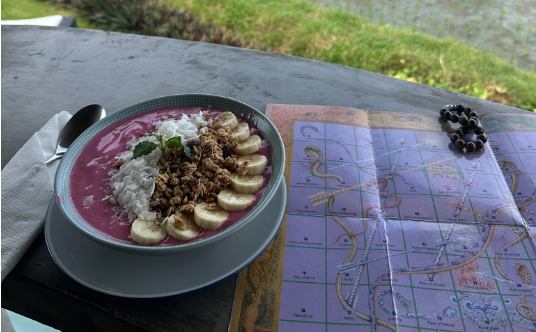
Leela is an ancient board game of self-knowledge that comes from the Himalayas. It is also called Gyan Chaupad and "The Yoga of Snakes and Arrows." The board is a mirror: it shows you where you are, what may be blocking you, and where life may be asking you to go next.
Leela: The Game of Self‑Knowledge is an ancient Indian board game designed as a spiritual tool rather than entertainment. It’s compared to Chutes and Ladders, or Snakes and Ladders, but instead of simple ups and downs, the snakes and arrows represent karmic forces, life lessons, and states of consciousness.
The board is described as a map of the soul’s journey, showing how a person moves through different internal states toward union with the Absolute. Each square represents a psychological or spiritual condition, and the movement through the board mirrors movement through one's life. For thousands of years the 72 spaces on this board have enabled players to chart their paths that represent the course of their lives. Repeated encounters with the snakes and arrows on the board reveal a way, and highlighted by the commentaries give shape to habitual decisions and patterns resulting a greater self awareness.
Players roll a die powered with their own karmic forces to advance, but the real purpose is self‑reflection: interpreting where they land, what the symbols mean, and how the game mirrors their own inner development.
Harish Johari (1934–1999), an Indian artist, composer, yogi, and teacher who wrote many books on spirituality, tantra, healing, and Eastern philosophy.
Not a game to win
Unlike modern Snakes and Ladders, Leela is not about reaching the end first. It is a transformative psychological and spiritual practice. A few hours at the board can bring the kind of insight that usually takes much longer in meditation, therapy, or reflection.
The map of the board
The board has 72 squares. Each square represents a stage of consciousness, a virtue, or a vice. Together they trace the full journey of a human life — from confusion and pride to clarity, compassion, and liberation.
- Arrows and ladders represent virtues, clarity, and spiritual progress. They lift awareness upward.
- Snakes represent ego patterns, illusions, and setbacks. They pull awareness back down so the player can see what still needs attention.
- The squares are connected to the chakra system and the energetic body.
What the game reveals
Players come to Leela when they feel stuck, lost, or disconnected from themselves. The game does not tell you what to do. Instead, it quietly shows you:
- Where you are in life "here and now."
- Where and why you feel stuck.
- The subconscious patterns, stereotypes, and beliefs that constrain you.
- What is draining your energy and where to find the strength to move forward.
- Your true desires and the next step toward them.
Why it is re-emerging now
Leela is being revived because it answers a modern need: a simple, grounded way to step back from noise and see oneself clearly. It is playful, mystical, and deeply practical at the same time.
"Just as the origins of modern playing cards are rooted in the tarot, the popular children's game of Chutes and Ladders is derived from the ancient Hindu game Leela, or Snakes and Arrows, which charts the ups and downs of the soul's path toward reunion with the Infinite. Snakes and Arrows was designed by the seers and saints of India as a tool for understanding the relationship of the individual self to the Absolute Self.
There is really only one game in life and that is Leela, the game of self-knowledge and the universal play of cosmic energies."